


In the brutal world of ancient Assyria, power was expected to manifest in a certain way. It looked like a man with a crown, a lion’s mane for a beard, and a mighty army at his back. The throne was a man’s prize: a seat guarded by bloodlines, swords, and centuries of tradition.
However, in the 9th century BCE, rules and expectations changed. When the king died, there were whispers everywhere about who would claim the throne. In the court, generals with bloody swords and nobles with greedy eyes sized each other up. Everyone assumed the power would be passed to the next man who was bold enough to take it.
But then, through the murmurs, a figure stepped forward. It wasn’t a general who had graced many battlefields; it wasn’t a noble with ancient bloodlines. To the shock of the court and the people of the kingdom, it was a woman.
Gasps could be heard from every corner of the court. Everyone was surprised. It wasn’t how things were supposed to go; queens were meant to weep and grieve after their husbands’ death, not rule. Widows were supposed to fade into the shadows, not seize crowns.
But Sammu-ramat was different. She doesn’t ask permission; she doesn’t wait for approvals. She takes the throne, and when challengers rise, she silences them. She cut down rivals, sent assassins to clear paths, and used daggers in the dark – whatever it took.
The most feared “king” of Assyria was not a man. It was a queen who was bold enough to seize power in an empire that was full of conquerors.
Her story is one of those rare moments in history when a woman not only stepped into a man’s world but also absolutely crushed it. This article tells the tale of how a queen became a king, how she broke every rule written about gender and power in her time, and how her legacy became so legendary that centuries later, people still whisper her name.
Let’s get into it.
Who Was Sammu-ramat?
Let’s set the stage.
We are in the 9th century BCE, in ancient Assyria. This was not the kind of place where you would want to take a vacation. Assyria was the ultimate tough-guy empire. Kings of this kingdom bragged about skinning their enemies alive, stacking skulls at city gates, and forcing conquered people into slavery. Assyria wasn’t known for its kindness; it was known for its conquests.
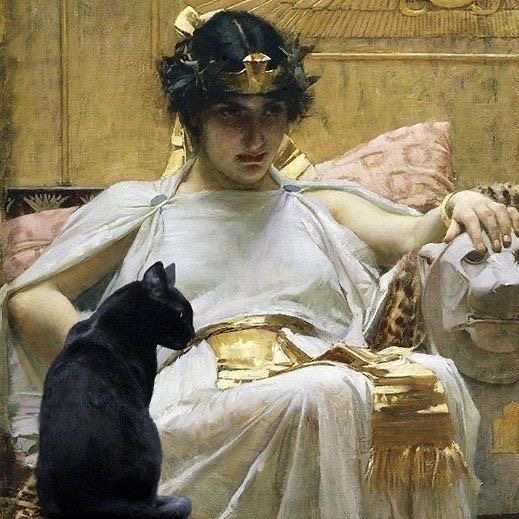
Sammu-ramat lived in this bloodthirsty world. She was originally the wife of Shamshi-Adad V, the Assyrian king, and as queen, her role was supposed to be ceremonial; she was supposed to be seen but not heard. She might have presided over religious rituals or palace functions, but politics? War? Throne-related business? That was men’s territory.
Except… fate had other plans.
When the King Dies, the Queen Must Choose
In 811 BCE, Shamshi-Adad V suddenly died. This left the throne open for his son, Adad-nirari III, who was still very young.
Usually, in situations like this, the generals and advisers of the empire would circle around like vultures, trying to seize control, and queens were expected to step aside quietly.
For the first and possibly the only time in Assyrian history, a woman claimed the masculine royal title.
Queens except Sammu-ramat. She didn’t step aside; she stepped forward.
Sammu-ramat realized that if she left power in the hands of scheming generals and greedy nobles, her son would never survive long enough to rule. So, she acted fast. She eliminated rivals, silenced critics, and put herself on the throne.
You should know that she didn’t put herself on the throne as queen regent, caretaker, or throne warmer; she made herself king! For the first and possibly the only time in Assyrian history, a woman claimed the masculine royal title. She wasn’t just filling in until her son was old enough; she was in charge.
Why Everybody Feared Sammu-ramat
So why did people take her seriously? After all, she crowned herself king in an empire where masculinity was practically worshipped. So how could a woman demand obedience from hardened generals and soldiers?
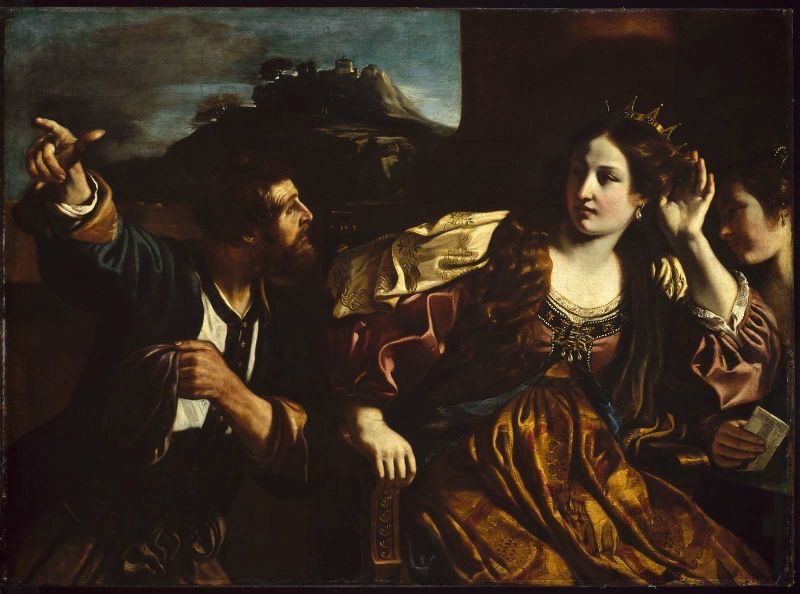
The answer is simple: Sammu-ramat did not just talk big; she backed up her words and actions.
She marched as the head of armies and led campaigns into dangerous frontiers. Inscriptions from her reign suggest that she participated in campaigns in the west of the Euphrates, an action that expanded Assyria’s borders and suppressed revolts. Imagine the shock of the enemy armies when the terrifying “Assyrian King” they were facing turned out to be a woman.
She also played the political game like a master. Instead of being seen as a weak link in the chain of rulers, she proved so strong that even neighbouring states treated her with the respect and fear that was usually reserved for Assyrian kings.
This was no ceremonial figurehead or puppet controlled by someone else in the shadows. This was a woman who had blood on her hands, strategy in her head, and power in her grip.
Breaking Every Rule
Let’s pause here and think about what Sammu-ramat was doing.
In her world, women were not supposed to rule empires. They were not supposed to command armies, nor were they supposed to hand down laws; yet she did all of it.
By stepping into the role of king, Sammu-ramat completely shattered traditional gender roles that had stood for centuries.
In a situation where a woman gains real power, she is either demonized or turned into a fantasy.
Take a minute to think about the message her action sent: In the most ruthless empire of its time, where women were rarely seen outside the domestic sphere, a woman sat on the throne and dared anyone to challenge her.
The wildest part is that no one dared to.
The Legend of Semiramis
Of course, when someone breaks this many rules, their story does not just fade into history; it explodes into legend.
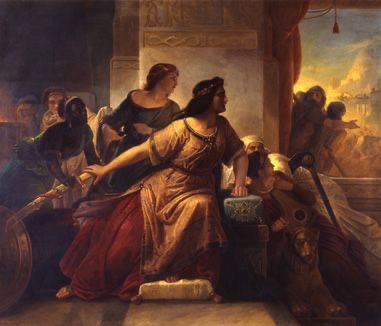
Centuries after her reign, the Greeks and Romans continued to talk about her. However, whenever they recount tales about her, Sammu-ramat becomes Semiramis, a kind of super-queen whose life blurs into a myth.
In these stories, she wasn’t just portrayed as a ruler; she was a conqueror who built Babylon’s great walls, launched campaigns as far as India, and founded cities across Asia. Some stories portrayed her as a brilliant queen who was also a warrior, while others depicted her as a scandalous seductress who used her beauty to manipulate men.
It is a classic example of historical sexism. In a situation where a woman gains real power, she is either demonized or turned into a fantasy. But underneath all the myths, the truth still shines. Sammu-ramat was very powerful, so powerful that her name echoed for centuries.
Silencing Critics With Blood
Let’s not sugarcoat it. Sammu-ramat was not some gentle feminist icon. She ruled Assyria, remember?
This was a land where kings bragged about torturing enemies in their inscriptions. In order to survive in this brutal game, you have to play by brutal rules, so no, Sammu-ramat was not a gentle feminist icon.
She knew that as a woman on the throne, she could not afford to appear weak… not even for a second. So she doubled down on ruthlessness.
According to several stories, she dealt with the opposition swiftly and sometimes violently. Rivals who often underestimated her by thinking they could push her aside, in most cases, did not live long enough to regret it. She knew that as a woman on the throne, she could not afford to appear weak… not even for a second. So she doubled down on ruthlessness.
The combination of ambition, cunning, and calculated violence didn’t make her a survivor; it made her a ruler who was even more feared than many of her male predecessors.
How Long Did Sammu-ramat Rule?
Historians still debate the exact length of Sammu-ramat’s reign. Some of them believe that she held power for about five years as regent until her son was old enough to take over. Other historians suggest that she continued wielding influence for much longer, guiding her son’s reign from behind the throne.
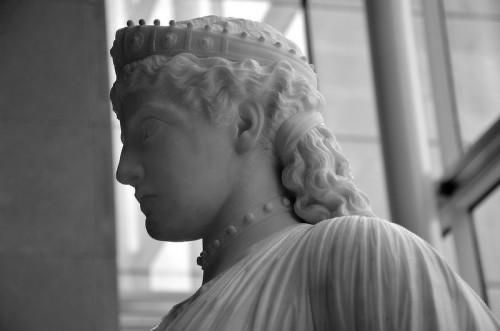
Either way, she left a mark so strong that her name appeared on official inscriptions and monuments, something that was almost never done for Assyrian queens.
One stela (a monument carved from stone) even describes her as a queen who accompanies the army on campaigns. That alone was unheard of. Queens were not supposed to be on the battlefield, yet there she was, leading from the front.
The First Queen-King
Here is the coolest part of her story. In many ways, Sammu-ramat became one of history’s earliest examples of a queen who ruled as a king.
Her enemies were not facing a woman who was pretending to be a king; they were facing a ruler who was every bit as ruthless, clever, and commanding as any man.
Later, history would see powerful queens like Cleopatra, Elizabeth I, and Catherine the Great, but Sammu-ramat was centuries ahead of them.
This is why the phrase “The king they feared was a queen” rings so true. Her enemies were not facing a woman pretending to be a king; they were facing a ruler who was every bit as ruthless, clever, and commanding as any man, perhaps more so.
A simple question then comes up. Why should we care about Sammu-ramat today, thousands of years later?
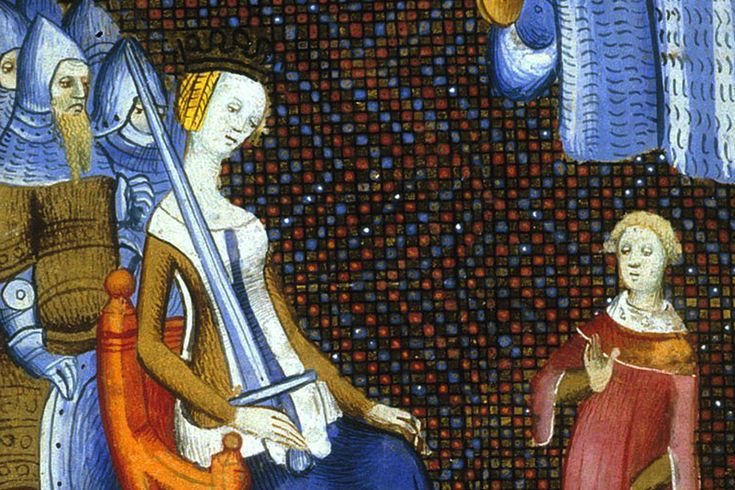
The answer is also simple. It is because her story reminds us that power is never just about titles or traditions. It is about having the courage to seize the opportunity when it arises, regardless of societal rules and expectations.
She didn’t wait for permission; she did not bow to expectations. Sammu-ramat just stepped into one of the deadliest arenas in history—the Assyrian throne—and held it long enough to change the game.
In doing so, she left the legacy that inspired legends, myths, and centuries of storytelling. She proved that even in the harshest patriarchal system, a woman could rise, rule, and command fear.
The Final Word
Sammu-ramat’s life is like something out of a blockbuster drama. The sudden death of a king, his widow turned ruler, a palace intrigue, assassinations, and a queen who claimed the title of a king.
So, what do you think? Was Sammu-ramat the ultimate “plot twist” ruler of history, or just a queen who refused to play by the rules? If she were to drop into today’s world, would she be running empires… or running for president?
We would love to hear your take! Drop your thoughts in the comments; bonus points if you can come up with a modern headline for her reign in our era. And hey, if you enjoyed the story of the queen who became a king, share it with a friend who loves a good “history rebel” tale. After all, legends only live on when we keep telling them.
